Authority Leaves the Laptop
7 stories · ~7 min read
Listen
If You Only Read One Thing
The next agent upgrade is not a smarter model. It is a smaller piece of authority moving with the work. OpenClaw 2.0 makes OpenClaw Makes Sessions Portable by sending a workspace to credential-free cloud workers; Browsers Become Agent Property shows Claude and ChatGPT separating delegated web sessions from browsers holding the rest of a user's life.
OpenClaw Makes Sessions Portable
OpenClaw 2.0 makes an agent session movable without making every machine equally trusted. The important release is not a new chat interface. It is the separation of conversation, authority, and execution into parts that can travel on different terms.
The tagged 2026.8.1 release can send work from a trusted Gateway to a paired device or cloud worker, move the session workspace with it, and later reuse a warm machine and project seed. A durable progress card survives reloads and exposes subagent activity. Structured questions can pause the run for a human answer. Recurring jobs can receive approval for one exact operation, with inspection and revocation afterward.
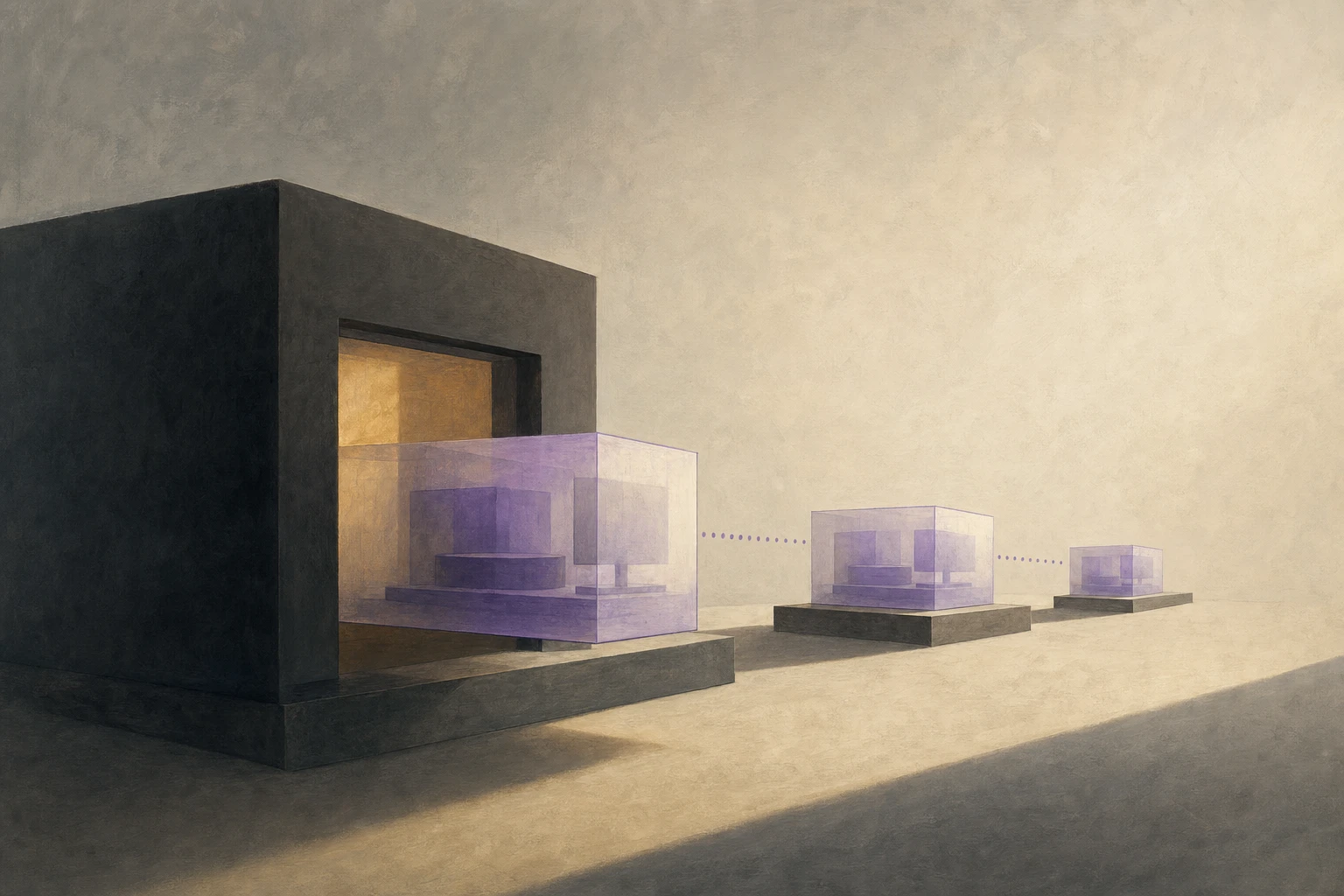
Think of the Gateway as an agent's control plane, the part that owns identity, policy, and durable state. A cloud worker is closer to a disposable build machine. OpenClaw syncs the workspace out, runs a restricted worker without standing model, repository, or cloud credentials, then reconciles the files through the Gateway. A masked credential request and an opt-in egress proxy can reveal a secret only to an approved destination without putting the value in the transcript.
August 20's briefing argued that agent harnesses were leaving chat while their live state remained nonportable. OpenClaw now moves the session and workspace together. That changes the unit of competition from a model call to a governed work object that can survive a laptop, a worker, or a process.
The strongest objection is in OpenClaw's own trust-boundary document. Sandboxing and execution approvals are off by default. One Gateway is one trust domain. Native plugins run in-process, and raw sockets from unsandboxed execution still answer to host policy. The project's 647 public advisories as of August 27 signal disclosure volume, not current safety, but they reject any claim that portability itself creates containment.
The payoff is precise: agent state can now outlive its original machine, while authority can remain behind. The next release will show whether that architecture becomes a default or stays an expert configuration. The concrete signal is whether new cloud-worker setups turn sandboxing on by default before OpenClaw moves its experimental fleet path into a stable maturity tier.
Browsers Become Agent Property
Browser agents are becoming more usable by owning a browser that is not the user's browser. That is capability isolation, not trust isolation: fewer ambient tabs and passwords enter the blast radius, but the delegated browser still carries real login authority.
Anthropic's built-in Cowork browser opens inside the desktop app, navigates sites, and fills forms. The prior path used Claude in Chrome, which acted inside a browser already full of personal state. The new browser imports logins one site at a time and excludes banking, email, and single sign-on unless the user explicitly includes them. It is available now for Enterprise and is rolling out this week to Pro, Max, and Team.
OpenAI had already made the same architectural bet. ChatGPT Work ships with a built-in desktop browser, scheduled web tasks, cloud network controls, and automatic review of important actions. Two frontier products have therefore put the browser inside the agent product rather than putting the agent inside a general browser.
The mechanism is delegated custody. A personal browser contains years of accumulated authority: cookies, active sessions, saved identities, and pages opened for unrelated work. A separate agent browser starts with a narrower set and lets the product attach policy to that set. Anthropic can exclude login categories; OpenAI can apply admin network rules. The browser becomes an execution environment rather than a window onto everything the user can reach.
The counterargument is that product-owned custody can concentrate risk. Anthropic calls prompt injection the largest browser-agent threat because a page can hide instructions that redirect the model. Its safety guide reports attack success below 0.08% in an internal configuration, while warning that novel attacks can still exfiltrate data. Its Cowork side panel also auto-approves actions classified as lower-risk by default. A separate cookie jar narrows exposure; it does not make page content trustworthy.
The practical shift is from sharing a browser to provisioning one. The falsifiable signal is the audit surface that follows: per-site action logs, credential-use records, and admin allowlists for the built-in browser itself. If those controls do not appear before enterprises import more authenticated sessions, convenience will have expanded faster than accountable authority.
The Contrarian Take
Everyone says: Cloud workers and separate browsers make autonomous agents safe because execution is isolated from the user's main machine.
Here's why that's wrong (or at least incomplete): Isolation only works when authority stops at the boundary. OpenClaw leaves sandboxing and execution approvals off by default, while Cowork still lets untrusted page content influence an authenticated browser. Both releases are valuable because they create places where policy can be enforced. Neither proves that the strongest policy is enabled. The durable advantage belongs to the runtime that can show which credential, site, workspace, and approval crossed each boundary.
Under the Radar
-
Pydantic preserves approval state across a frontend boundary. Its Vercel AI adapter now accepts AI SDK v7, carries deferred approval responses back into the run, and can restore an unanswered tool call as an approval request after reload. The caveat is equally useful: retry requests collapse into definitive failures across the wire, so the protocol still loses one recovery distinction.
-
OpenClaw 2.0 breaks old Codex route names on purpose. The release migrates
codex/*andopenai-codex/*references toopenai/*, including stored sessions and automations, and sends conflicts toopenclaw doctor --fix. Provider naming is no longer cosmetic when a route is embedded in durable agent state. (Source)
Quick Takes
-
Six Copilot model choices expire tomorrow. GitHub will remove Gemini 3.1 Pro, four older Claude variants, and Raptor Mini across chat, edits, agents, and completions. Sonnet 4.6 survives for annual individual subscribers, while enterprise replacements may require an admin policy change. Model choice is becoming an entitlement with plan-specific exceptions, not a stable API menu. (Source)
-
A safety test deleted the thing it was meant to protect. A developer reports losing 700 GB after a Claude-generated cleanup test reused one variable for the protected home directory and the test cleanup target. The harness had downgraded the reviewing model after flagging risk. Semantic caution did not compensate for an unprivileged test directory and a hard filesystem boundary. (Source)
-
Claude memory now crosses from chat into work. Chat and Cowork share one topic-based memory; cloud tasks can read what chat learned, and Cowork updates flow back. Users can inspect, edit, or delete each memory file, while sensitive topics stay off by default. Continuity improves, but one mistaken or poisoned fact now reaches more execution surfaces. (Source)
The Thread
Agent runtimes are separating authority from location. OpenClaw keeps durable identity and policy in a Gateway while work moves to another machine. Claude and ChatGPT put delegated web state in a product-owned browser instead of a personal one. Pydantic carries approval state across a frontend protocol, and Copilot's retirements show that even model access now depends on a policy layer above the model.
That separation creates a new systems question: which state is allowed to travel, and which authority must stay behind? Portable work without scoped credentials becomes remote compromise. Persistent memory without provenance becomes distributed error. The winning runtime will not merely move sessions farther. It will produce a receipt for every workspace, credential, approval, and model route that moved with them.
Prediction Ledger
Weekly Scorecard
- Qwen would publish downloadable Qwen3.8 weights under an explicit public license by August 31 — Made July 22, medium confidence. Correct: Qwen3.8-Flash-Next shipped open weights with an explicit license and serving paths.
- Two mainstream agent frameworks would document resumable checkpoints, graceful drain, or bounded timeout and recovery controls by August 31 — Made May 11, medium confidence. Correct: Vercel AI SDK shipped durable workflow execution, while Pydantic AI shipped bounded blocking-tool timeouts and recovery semantics.
- Two providers would publish reproducible Kimi K3 throughput on eight-GPU B300 or MI355X nodes by August 31 — Made July 28, medium confidence. Wrong: serving support broadened, but two qualifying independent hardware reports with stable images did not appear.
- Three local runtimes would document a stock Muse Glimmer plus DFlash path with reproducible speed results by August 31 — Made August 11, medium confidence. Wrong: the required three no-patch runtime paths and benchmarks did not ship.
What I Got Wrong
Both misses treated compatibility pressure as an adoption clock. A model architecture can attract patches without producing a stable artifact, named owner, and matched benchmark in several runtimes. The correct calls began with controls already visible in shipping framework work; the wrong calls began with technical possibility and assumed the ecosystem would coordinate on schedule.
Issue date: 2026-08-31 · Generated: 2026-08-31 04:03 AM ET
Tomorrow morning in your inbox.
Subscribe for free. 10-minute read, every weekday.